














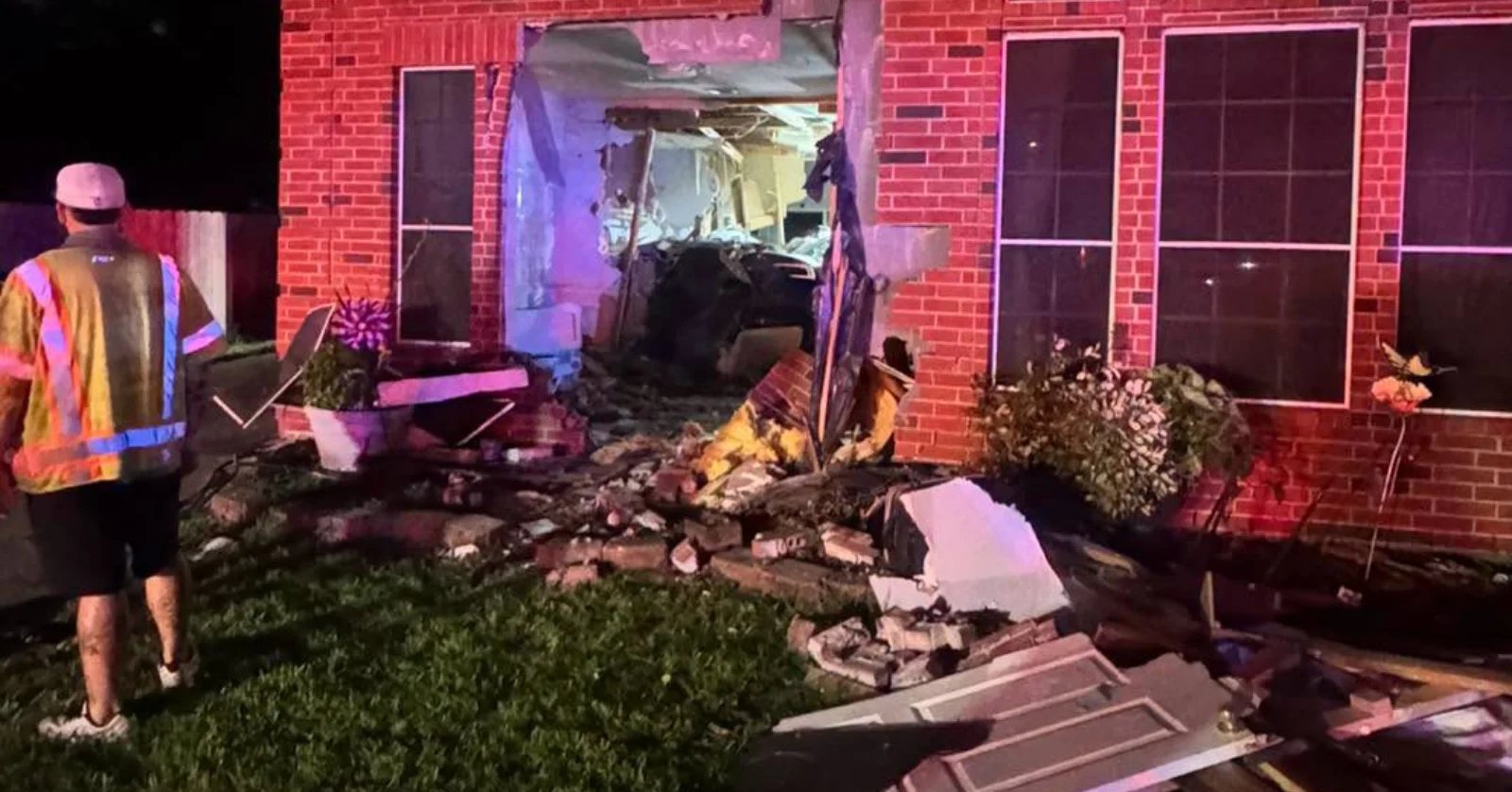
A Tesla Model 3 allegedly operating on autopilot plowed into a Katy, Texas, home on the evening of June 19, killing 76-year-old Martha Avila inside her own residence.
Harris County Sheriff Ed Gonzalez confirmed Avila’s death following the approximately 8 p.m. crash. The incident report identifies the driver as Michael Butler, who was seated behind the wheel at the time. Butler told deputies he had the Tesla’s autopilot engaged, and Constable Terry Allbritton, whose office is investigating alongside the Sheriff’s Office, confirmed Butler was transported to a nearby hospital by ambulance. According to the incident report, Butler showed no signs of intoxication and cooperated fully with investigators.
What Happened Inside the Home
The incident report states that Butler “failed to drive in a single lane” before his Tesla “entered through the brick residence, at a high rate of speed.” A doorbell camera captured the vehicle crossing the yard and striking the house. Avila’s daughter, Jennifer Barbour, shared that footage on Facebook, writing, “This is the car flying into my home. My mom didn’t deserve this.” Barbour, her husband, and their three children were inside the home at the time of the crash, according to local outlet KHOU-11. Avila was airlifted to a local hospital but was later pronounced dead from her injuries.
One of Barbour’s nieces launched a GoFundMe for the family, noting that the home is now uninhabitable and the family has been displaced into temporary housing. By the afternoon of June 22, the campaign had raised $22,898.
Tesla im „Autopilot”-Modus rast in Texas direkt in ein Wohnhaus und tötet eine 76-jährige Frau.
Wieder ein tödliches Opfer blinden Technik-Vertrauens.
Die Software versagt, Menschen sterben, aber Hauptsache, wir spielen alle Versuchskaninchen für autonome Träume. #Tesla pic.twitter.com/ZyOsMK0spT— Der Prophet (@AldousHuxIey) June 22, 2026
Tesla’s Self-Driving Safety Claims Under Scrutiny
Tesla has offered varying levels of self-driving technology in its vehicles since 2015. As of June 22, 2026, the company’s safety report promotes its Full Self-Driving (Supervised) mode — which requires an alert driver in the seat — as producing seven times fewer major and minor collisions and five times fewer off-highway collisions compared to standard driving. Tesla’s data further claims that Full Self-Driving vehicles experience minor collisions only once every 5.5 million miles, versus once every 660,000 miles for conventionally operated cars.
With an active investigation underway and questions mounting about the circumstances of the crash, the case is likely to draw continued scrutiny of how Tesla’s driver-assistance systems perform — and how drivers use them — in real-world conditions.
This is a developing story.