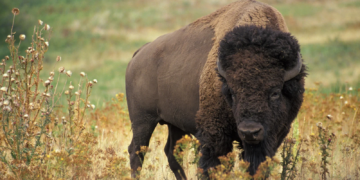















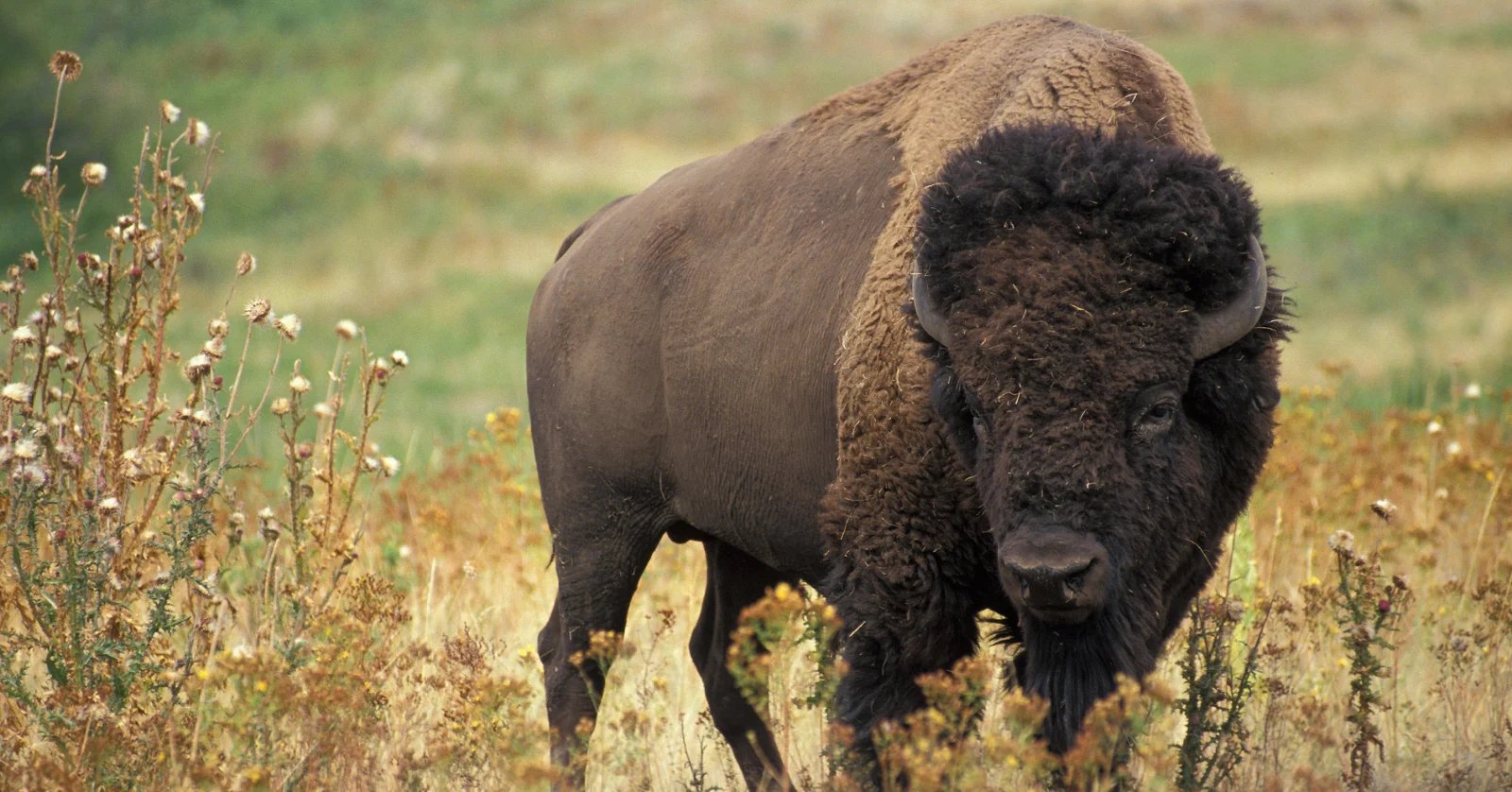
A retired Washington man was thrown into the air and left with multiple broken bones after an aggressive bull bison charged through Bridge Bay Campground in Yellowstone National Park on Friday, July 10.
Carl Isom-McDaniel, a retiree from Kendall, Washington, was walking through the campground near Fishing Bridge with his grandson when the bull locked onto them and charged from roughly 100 yards away — a distance already four times the park’s required 25-yard safety buffer. Professional photographer Mike MacLeod captured the entire sequence on video.
What the Footage Reveals
The video shows the bull had been agitated well before Isom-McDaniel and his grandson appeared. Moments earlier, the animal had already charged at a group of children who were photographing it from what looked like a reasonable distance. The children fled and the bison briefly backed off, dropping to wallow in a dirt patch. When Isom-McDaniel and the boy rounded a corner, the bull turned its attention toward them immediately.
The animal pursued the pair through a stretch of trees before finally reaching Isom-McDaniel and launching him several feet off the ground. He sustained multiple broken bones as a result. The National Park Service has not issued any official statement about the incident.
A Recurring Danger at Yellowstone
The attack comes just weeks after a 12-year-old was injured by a bison at Yellowstone in June, underscoring a pattern that park officials have long warned about. According to the National Park Service, bison have injured more visitors at Yellowstone than any other wild animal in the park. Most incidents involve people who approach the animals too closely — whether for photographs or simply out of curiosity — or who fail to retreat when a bison shows signs of agitation.
Park regulations mandate a minimum distance of 25 yards between visitors and bison at all times. The animals can weigh up to 2,000 pounds and reach speeds of 35 mph, and with peak summer visitation now underway, the frequency and visibility of close encounters is likely to remain a pressing concern for park management.